It was following a relatively short trip to Patagonia last year, to tie up some loose ends and close the book in my mind, that plans for this current trip were hatched. You see, on that Patagonia trip I met a bunch of guys who were definitely of the same mind – we met again in Northumberland, ate and drank and talked about riding.
None of us had been to the northeast part of Canada, and didn’t know anything about it except that it was a bit wild, unpopulated and with not many roads. Three of us has been to the Yukon and Alaska though, and all had a hankering to revisit. What else do you need to start a plan? So here we are, 11 months later.
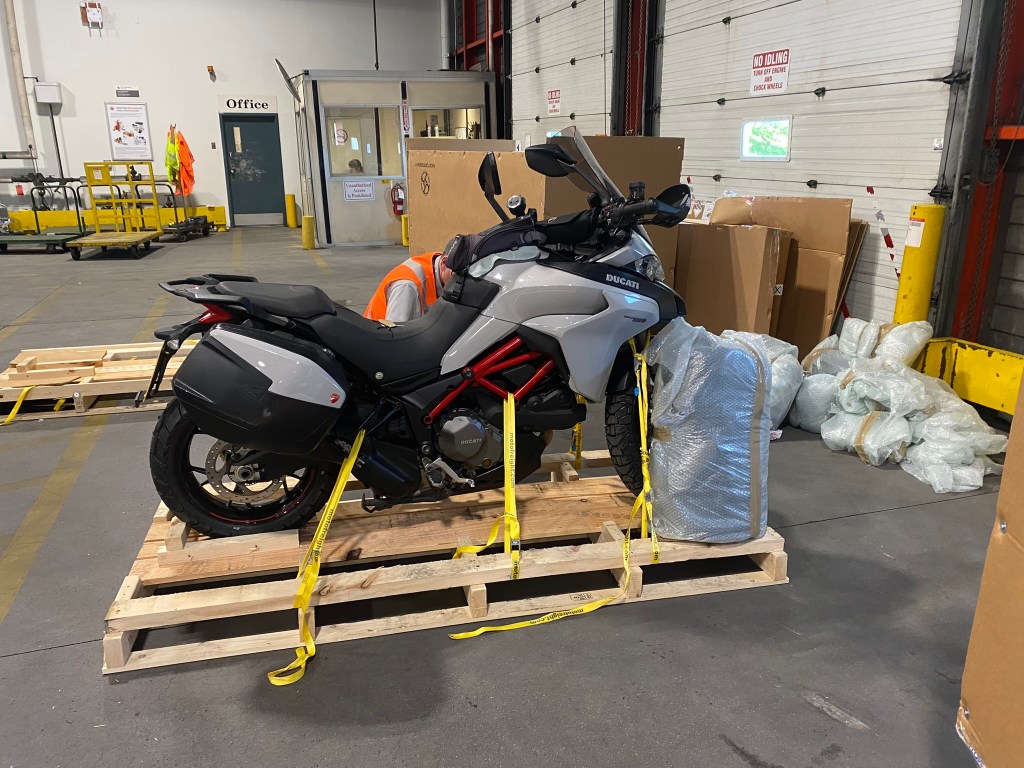
Four of us, Chris, Dave, Al and myself flew to Halifax in Nova Scotia; our bikes were freighted there with the excellent services of Motofreight. I’m writing this about 10 days later and will be brief.
The plan is to ride from the most eastern point of the North American continent to the most western point that are accessible by contiguous roads.
To the east of Halifax lies the island of Newfoundland so our east to west trip must start with heading in that direction. Nova Scotia is pretty empty but looked lovely in hot sunshine, dense low forests and sparkling blue water everywhere. Pretty much like Old Scotland.

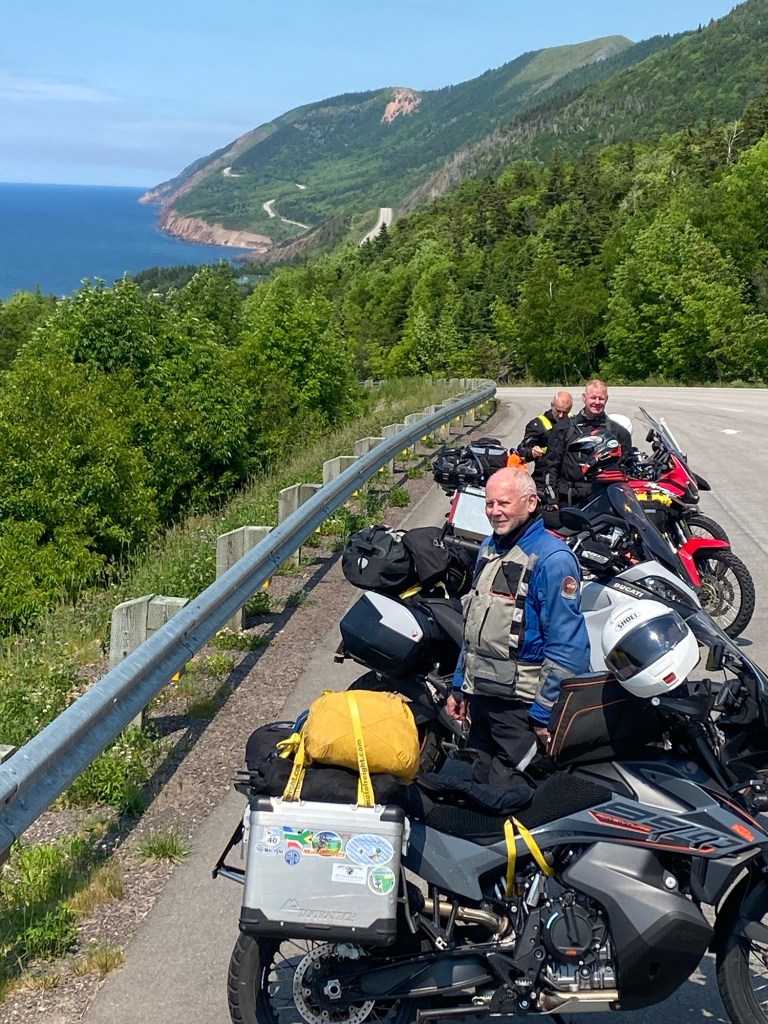
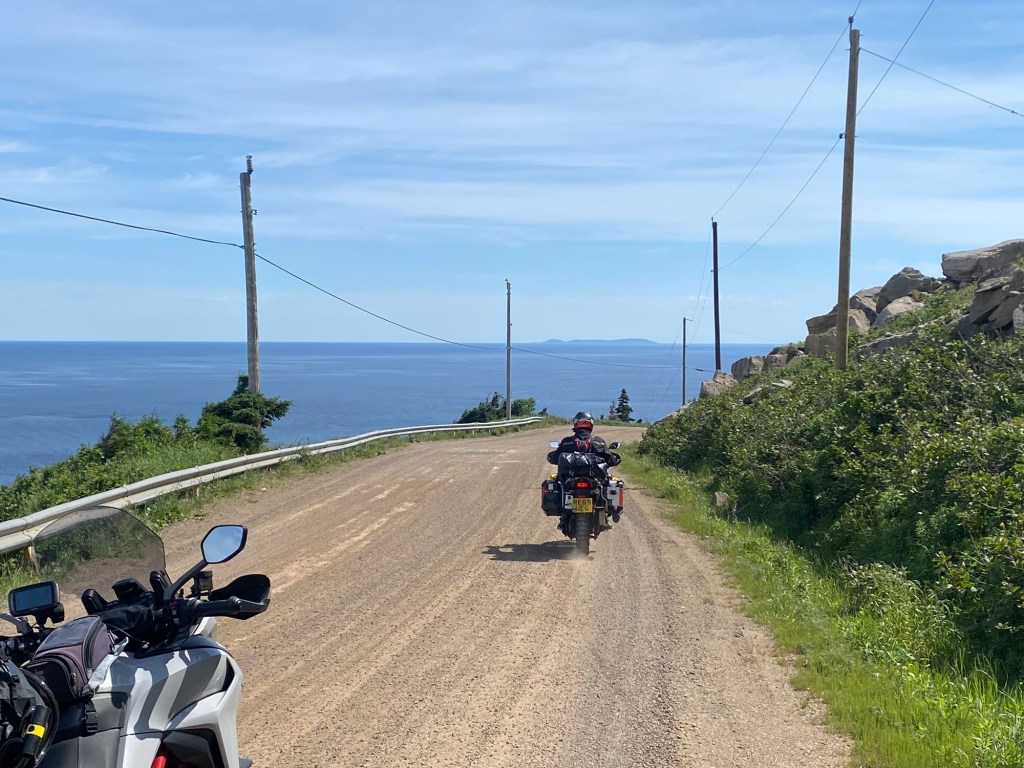
We had booked on an overnight ferry from NS to the eastern end of Newfoundland to avoid having to ride most of the 900 km road across the island twice. The first hurdle of our trip: that ferry, supposedly brand new, was out of action and we had been rebooked on a much shorter ferry to the west end of Newfoundland. We had no choice. So two days extra riding to St Johns and a couple of days there during which we attained the furthest eastern point at Cape Spear. A rocky end of land, and start of the Atlantic Ocean.
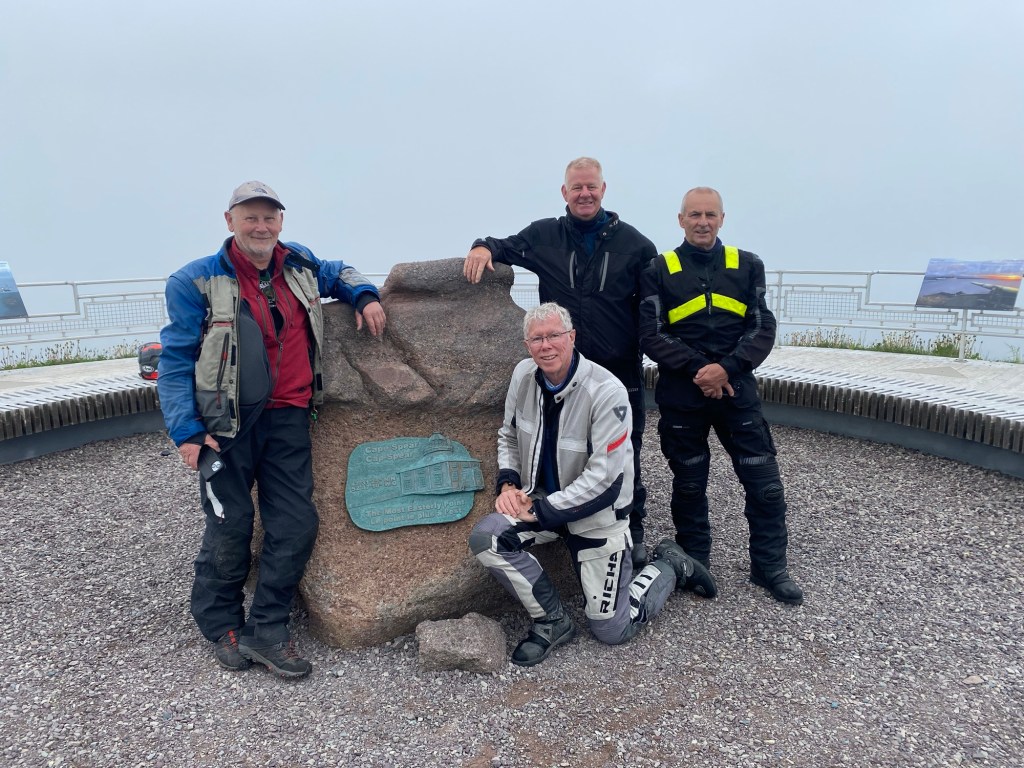
Having achieved this objective, the ride from East to West could properly begin. It took us back on the same road that we had taken previously for about 600 km, also in rain.
Impressions of Newfoundland are of forest and water, and of course rain. It’s empty of people for the most part but does have some interesting history. Remember Captain Arab from Moby Dick? And a century later, BOAC searched for a site to build an airport to facilitate trans-Atlantic flights; they found a large area of flat ground at a place called Gander. This became an important point of departure in WW2 for Canadian and US planes flying over to join the allied forces in Europe. And 80 years later still, it received about 48 aircraft that were required to land in the immediate aftermath of the 9-11 attacks. The population of Gander turned out in force to welcome and provide for the thousands of bewildered stranded passengers – an event that was told in a Broadway musical (also London) called Come From Away, which I saw a couple of years ago.
Next stop: Labrador.
 Crossing Canada